News Detail
Securing the Future of the Javan Rhino: Lessons from Two Decades of Second Habitat Studies
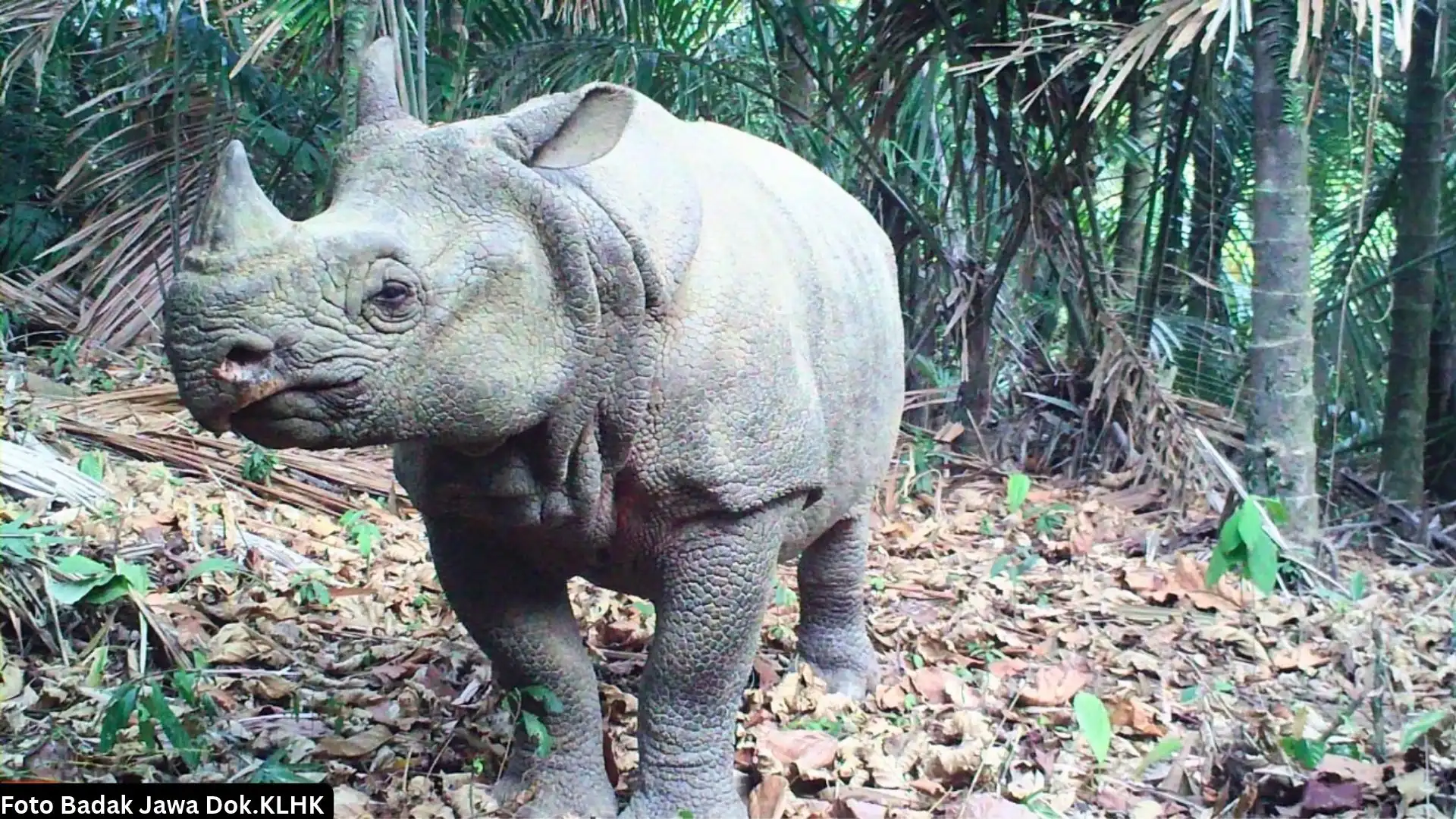
Jakarta–BRIN Public Relations. Preserving the Javan Rhinoceros (Rhinoceros sondaicus) requires long-term conservation efforts backed by research and multi-stakeholder collaboration. Over nearly two decades, various studies on a potential second habitat have provided valuable lessons: establishing a new population involves more than just ecological suitability; it also requires community support, management readiness, and comprehensive scientific considerations. These insights serve as a key foundation in revisiting the discourse on establishing a second habitat for the Javan rhino, including the assessment of Alas Purwo National Park in East Java.
This statement was highlighted by Principal Researcher at the Research Center for Ecology of the National Research and Innovation Agency (BRIN), Prof. Hendra Gunawan, during an interview with BRIN Public Relations on Tuesday (17/11). According to him, assessing Alas Purwo National Park in East Java as a prospective second habitat presents a momentum to strengthen scientific discussions regarding the future conservation of this endangered species.
Hendra explained that establishing a second habitat is not merely a matter of relocating animals from one area to another. Its primary goal is to build an additional population to mitigate the risk of extinction through a conservation strategy known as metapopulation. "The main objective is to establish an additional population to reduce the extinction risk of the Javan rhino using a metapopulation conservation strategy," he explained.
Currently, the entire wild Javan rhino population is concentrated in Ujung Kulon National Park. This concentration creates vulnerability should a large-scale disaster, disease outbreak, forest fire, or other ecological disturbance occur, as it could impact the entire population simultaneously. Therefore, establishing populations in alternative habitats is a strategic measure to bolster the species' long-term resilience, without compromising the priority of protecting its natural habitat in Ujung Kulon.
Under the metapopulation framework, Ujung Kulon serves as the main population (mainland), while secondary populations in other habitats function as islands. Managing multiple populations in an integrated manner is expected to reduce the species' reliance on a single area for survival. Inter-population genetic connectivity must also be addressed and managed through planned conservation interventions grounded in genetic and demographic research. "Thus, a more accurate concept is the development of an additional population through translocation conservation programs, rather than relocating the entire population at once," Hendra emphasized.
Lessons from Second Habitat Assessments
Hendra revealed that establishing a second habitat for the Javan rhino is not a new concept in the national conservation agenda. The strategy was explicitly outlined in the Strategy and Action Plan for the Conservation of Rhinos in Indonesia 2007–2017. He was personally involved in several feasibility studies for potential second habitats, focusing on assessing socio-economic and socio-cultural factors, as well as public perception and acceptance among local communities near potential sites.
In 2009, Hendra noted, studies conducted under the Second Habitat Assessment for the Javan Rhinoceros program focused on the Gunung Honje Forest Block in Ujung Kulon National Park and the Citorek area in Gunung Halimun-Salak National Park. The research revealed that local community support for the second habitat plan around Mount Honje reached 46%, compared to only 23% around Mount Halimun. Conversely, rejection rates were 24% and 54%, respectively.
According to him, these findings illustrate that ecological suitability does not automatically guarantee sufficient social acceptance. Economic conditions, dependence on forest resources, land tenure status, and community perceptions of national park management all significantly influence local support.
Subsequent studies were conducted in 2015 through a WWF research program in Cikepuh Wildlife Reserve (Sukabumi, West Java) and the Cikeusik forest area within the Banten KPH management unit (Pandeglang). Surveying 540 respondents across 18 villages alongside 54 key local government stakeholders, the results showed an 85,8% community acceptance rate around Cikepuh Wildlife Reserve. In contrast, acceptance around the Cikeusik forest stood at only 24%, with 55% of respondents remaining neutral.
A key insight from the study was the perception among some community members who view the Javan rhino as a cultural identity of Banten Province. Certain respondents around Cikeusik expressed opposition to moving the pride of their region outside the province. Conversely, communities around Cikepuh demonstrated enthusiasm, expecting the presence of the Javan rhino to enhance forest protection, generate economic opportunities, create jobs, and foster ecotourism. “These findings underscore that community support is a crucial prerequisite for the successful establishment of a second habitat,” he noted.
Not All Forested Areas Are Suitable
According to Hendra, selecting a second habitat demands meticulous evaluation, as vast, lush forests rich in biodiversity are not automatically suitable for Javan rhinos. Government assessments have established 13 critical criteria, including historical distribution, habitat suitability, year-round water availability, conservation status, area size, management capacity, external support, local government commitment, and potential for education and ecotourism.
Beyond these criteria, contemporary assessments must evaluate ecological carrying capacity, availability of natural forage, wallowing sites, home range space, health conditions, disease risks, area security, and potential human-wildlife interactions. Socio-cultural aspects must also be integral to planning. Local communities around candidate sites should be engaged from the outset through transparent communication and consultation to align conservation goals with community interests. “A robust conservation program should not pit wildlife conservation against community welfare. Instead, both must be built synergistically,” Hendra explained.
Regarding Alas Purwo National Park, Hendra emphasized that the site requires an independent evaluation. Alas Purwo was not among the four sites evaluated during the 2009 and 2015 studies in which he participated. Consequently, findings from Mount Honje, Mount Halimun-Salak, Cikepuh, and Cikeusik cannot be directly applied to infer the suitability or unsuitability of Alas Purwo. “Alas Purwo must be assessed independently using relevant criteria and updated conservation methodologies. The findings should then be objectively compared against alternative sites,” he stated.
He also cautioned that exploring Alas Purwo as a potential second habitat still requires rigorous scientific inquiry. To date, no decisions have been finalized regarding site selection, the number of individuals to be translocated, methodology, or execution timelines. Protecting the Javan rhino population in Ujung Kulon remains the top priority and must proceed in tandem with second habitat assessments.
Research and Collaboration for the Future of the Javan Rhino
In addition to habitat evaluations, advancements in reproductive technologies and genetic conservation play a pivotal role in sustaining the Javan rhino population. Notable initiatives include the establishment of the Assisted Reproductive Technology (ART) Laboratory and Bio-Bank at IPB University School of Veterinary Medicine and Biomedical Sciences to support the conservation of endangered wildlife through assisted reproduction and bio-banking. Furthermore, the development of the Javan Rhino Study and Conservation Area (JRSCA) within Ujung Kulon National Park serves to strengthen management, research, and conservation learning.
Hendra stressed that saving the Javan rhino demands a multidisciplinary approach integrating ecology, genetics, veterinary medicine, reproductive technology, socio-economics, anthropology, and conservation policy. Therefore, decisions regarding a second habitat must be grounded in defensible research rather than convenience or short-term perceptions. "We should view the second habitat dialogue as an opportunity to reinvigorate scientific discussions surrounding the future of the Javan rhino. Public debate should move beyond binary views for or against translocation, focusing instead on the fundamental question: how can we best ensure the long-term survival of the Javan rhino?" he concluded.
According to him, lessons gathered from second habitat assessments since 2009 provide an essential foundation for evidence-based conservation policy. Collaboration among experts, government entities, conservation managers, research institutions, non-governmental organizations, and local communities is essential to execute consistent and sustainable recovery strategies. Establishing a second habitat does not mean abandoning Ujung Kulon; rather, it represents a proactive effort to safeguard the species' future by mitigating reliance on a single population and location. (ugi/translator:irf)