News Detail
To Address the Risks of Geological Disasters, Indonesia and Japan Strengthen Research on Disaster Risk Reduction and Resilience
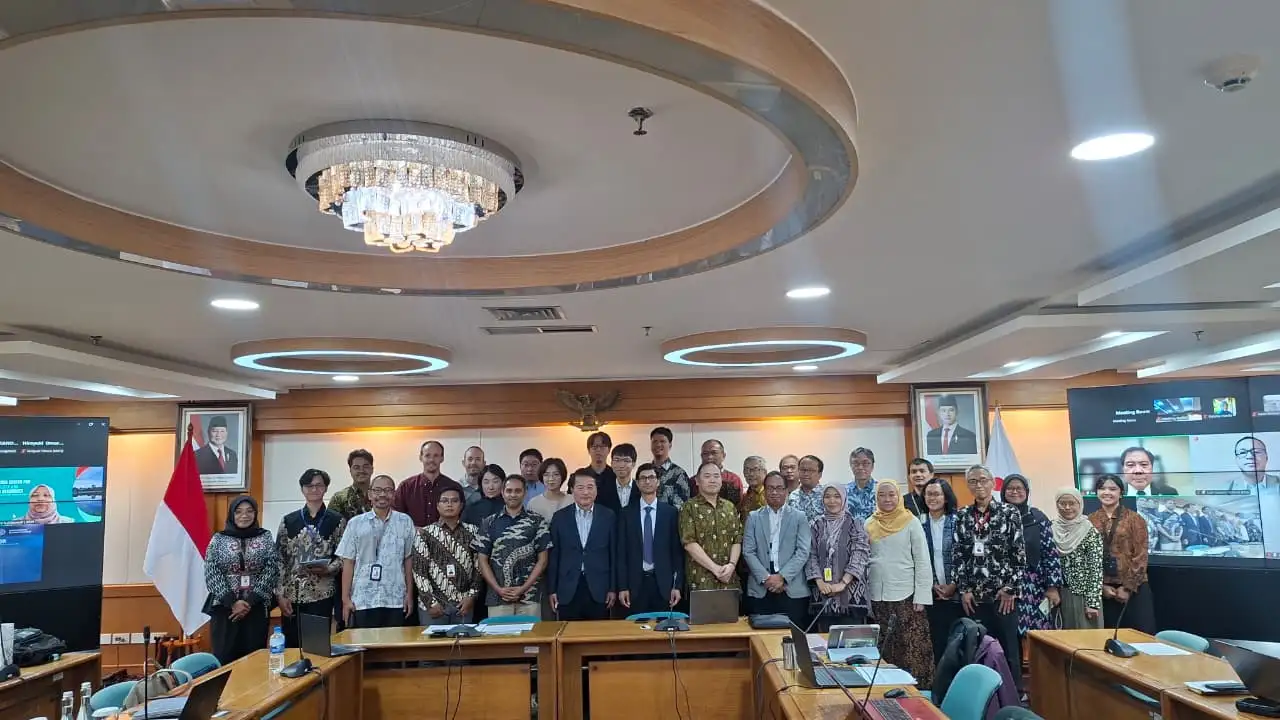
Jakarta - BRIN Public Relations. The National Research and Innovation Agency (BRIN), together with Japan’s National Research Institute for Earth Science and Disaster Resilience (NIED), strengthened research collaboration in the field of disaster risk reduction through the 1st BRIN–NIED Annual Disaster Risk Reduction (DRR) Workshop, held at the B.J. Habibie Building in Jakarta on Thursday (4/9). This first annual workshop marks the launch of a joint research project between BRIN and NIED focused on various disaster risks, ranging from multi-hazard disasters, seismic resilience and engineering, disaster information systems, water and sediment-related disasters, to seismic monitoring.
BRIN Chairman of Disaster Response Task Force, Joko Widodo, welcomed the workshop. According to him, cooperation between Indonesia and Japan is important because both countries face relatively similar types of disasters. “Indonesia and Japan share many of the same disaster challenges, including earthquakes, tsunamis, volcanic eruptions, floods, landslides, and extreme weather,” he said.
He noted that this situation demonstrates that disaster risk reduction efforts cannot rely on a single party alone. According to him, disaster mitigation and resilience efforts require strong scientific and research support, advanced technology, and close international collaboration.
Through this workshop, experts from various fields gathered to exchange knowledge and discuss the advancement of disaster-related research. Topics covered included meteorology and heat-related hazards, landslides, earthquakes, tsunamis, volcanoes, remote sensing, disaster information, and community resilience.
Joko hopes that the collaboration between BRIN and NIED can grow through joint research, technology exchange, scientific publications, and the development of more concrete collaborative programs. According to him, the results of this collaboration are expected not only to strengthen scientific excellence but also to support early warning systems, improve preparedness, and build communities that are more resilient in the face of disasters.
The President of NIED Japan, Prof. Kaoru Takara, stated that the annual BRIN-NIED workshop serves as a new platform to strengthen knowledge exchange and research collaboration between the two countries. He noted that Japan and ASEAN countries share a high level of vulnerability to various natural disasters, such as earthquakes, tsunamis, heavy rains, floods, and disasters related to climate change.
Japan, Takara said, has a long history of dealing with various disasters. However, the experiences of ASEAN countries also hold significant value from which Japan can learn. “I believe we can exchange experiences from Japan to ASEAN, and vice versa, as well as among ASEAN countries,” he said.
Takara explained that previous discussions between BRIN and NIED have covered a number of areas, such as natural hazard research, observation technology, data analysis, disaster assessment, and information sharing. He hopes that this cooperation will not be limited to bilateral relations but will lead to broader research collaboration across the ASEAN region.
According to him, this first workshop is an important step toward transforming previous discussions into concrete research collaboration while establishing a framework for long-term collaboration between BRIN and NIED. He also welcomed the establishment of a BRIN center of excellence within the Integrated Research on Disaster Risk (IRDR) network. He believes the existence of this center can strengthen the international research network on disaster risk reduction.
Currently, the network includes various centers of excellence in a number of countries. NIED itself is one of the institutions hosting an IRDR center of excellence in Japan. Takara hopes that cooperation between the centers of excellence in Indonesia and Japan will further strengthen knowledge exchange and research collaboration within the IRDR community.
He hopes the BRIN-NIED workshop can serve as a first step toward broader cooperation to build disaster resilience, not only in Indonesia and Japan, but also in the Asia-Pacific region and globally. (jml)