News Detail
Indonesia–Korea Emotional Bonds Go Beyond Diplomacy and Business
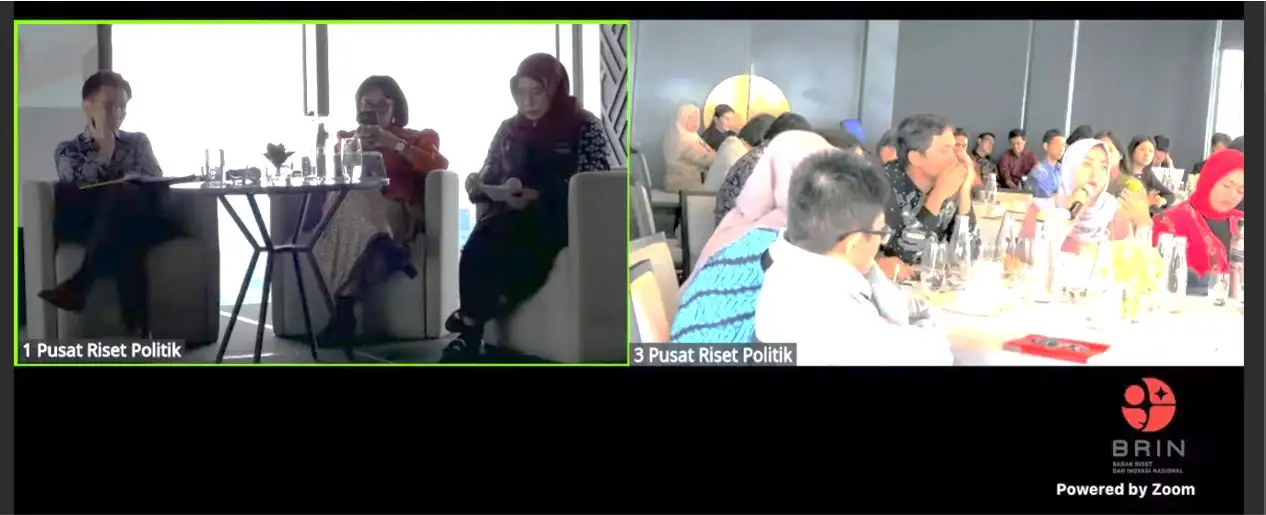
Jakarta – BRIN Public Relations. Researcher at the BRIN Research Center for Politics, Irine Hiraswari Gayatri, who also serves as Executive Director of MOST UNESCO BRIN, explained that through K-pop, Korean dramas, fashion, and food, Indonesians and Koreans clearly form emotional bonds that go beyond politics or economics.
“It is quite clear—culture serves as a bridge that connects hearts before it connects policies. It is fascinating to see this shift from cultural diplomacy to cross-community collaboration,” Irine stated during the Korea–Indonesia Strategic & Culture Cooperation Forum, themed Strengthening Strategic and Cultural Partnerships, in Jakarta, Tuesday (11/11).
This is not a one-way process, she added, because every party involved in cultural diplomacy can appreciate what is being conveyed and how to facilitate it, as both sides understand its impact. Appreciating beauty also means appreciating everyone’s involvement in a project.
“So, social media and online communities, for instance, have become powerful spaces for digital diplomacy, where ordinary citizens can shape narratives of international relations and friendship,” she explained.
Other studies, Irine continued, emphasize the growing influence of non-state actors.
“The role of non-state actors is highly significant. We can highlight them because diplomacy cannot progress without their participation—especially fan communities and influencers,” she said.
She elaborated that building trust between communities and societies has become essential, and in this new landscape, pop culture has emerged as one of the most effective tools of 21st-century diplomacy.
“Research also notes that Indonesia is one of the most active K-pop fan communities in the world, including negative reactions toward other K-pop groups. But that is what makes it interesting—it is not something viewed as entirely negative. It actually shows that people have emotional bonds,” she explained.
She also mentioned findings from 2024 research showing that 88% of fans in Java alone amounted to more than 12,000 people in the province, indicating massive market potential.
“Imagine our government also acknowledging this data, supporting our own artists to export the same cultural agility that South Korea has sent us through Hallyu or the Korean Wave,” she said.
Globally, this serves as an important asset for analyzing soft power and cultural diplomacy dimensions.
“So, let us consider for a moment—we have nearly 300 million people in Indonesia. I challenge the current government to shape, support, and facilitate every organization with creative energy in Indonesia,” Irine concluded.
Meanwhile, in the following session, Sandiaga Salahuddin Uno, Indonesia’s Minister of Tourism and Creative Economy for the 2020–2024 period, stated that the bilateral relations between Indonesia and South Korea are no longer limited to government-to-government diplomacy. This strategic partnership has grown stronger at the personal level, driven by cultural exchanges and significant economic contributions.
“The brotherhood and cooperation that have lasted more than fifty years will only grow stronger in the future. The rise of tourism, beauty products, and increasing creative content collaborations show that culture plays a significant role as an economic driver,” he said.
Sandi emphasized that the focus of cooperation should not be solely on profit, but also on community empowerment to enhance global competitiveness.
Ko Young Kyung, Research Professor at Yonsei University, stated that in the current era, culture is no longer merely entertainment—it has transformed into an economic engine that reaches across various ecosystems.
“Globalization has not ended; it is evolving. And the current trend is shifting from goods to services. In 2023, global trade recorded a 5% decline in goods, while services grew by 8%,” she explained.
Kyung presented two main reasons behind the explosion of service trade in Korea: the manufacturing industry and Hallyu (the Korean Wave). According to her, Hallyu plays a massive role in Korea’s economic growth.
“The total economic impact of Hallyu in 2024 is estimated at USD 15 billion. From dramas, games, cosmetics, to culinary industries, Hallyu creates a domino effect across various sectors,” she added.
Furthermore, Kyung noted that the rapid rise of Korean culture on the global stage does not automatically mean Indonesia is merely a Korean market.
“Indonesian cuisine has become well-known among Koreans, Bali is a popular tourist destination, and many Indonesian students and workers in Korea indicate that Indonesia–Korea relations are truly reciprocal,” she said. (lus/ed: suhe, ns)