News Detail
Divorce in Indonesia: A Social Phenomenon That Requires Attention
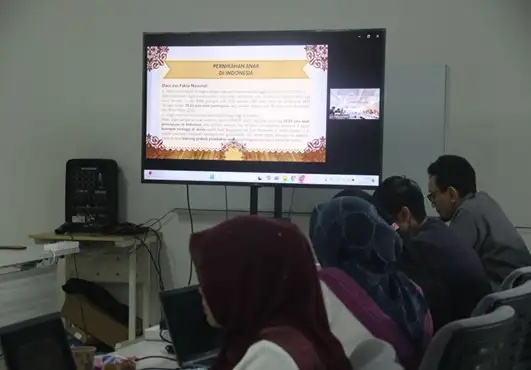
Jakarta – BRIN Public Relations. The rising trend of divorce in Indonesia in recent years has drawn serious attention from various stakeholders. Data from Statistics Indonesia (BPS) shows that divorce rates have continued to increase from 2019 to 2022, while marriage rates have declined.
This issue surfaced in the webinar “Family Resilience, Welfare & Gender Issues” held by the Research Group on Religion, Gender, and Minority Groups, Center for Religious and Belief Studies (PR AK), National Research and Innovation Agency (BRIN), at the BRIN Gatot Subroto building, Jakarta, on Wednesday (12/11).
Aji Sofanudin, Head of PRAK–BRIN, stated that based on BPS 2024 data recording approximately 408,347 divorce cases, 78% of them were filed by wives. One example is the rising number of divorce cases among certified female teachers who earn higher incomes than their husbands.
According to Aji, income disparities often affect household harmony. When the wife holds a stronger economic position, the potential for imbalance in family relations increases.
Even so, the divorce trend has begun to show improvement in 2025, supported by various government programs such as pre-marital counseling and young family education, which aim to prepare couples for the challenges of modern household life.
In addition to divorce issues, Aji explained that family resilience is also affected by social and economic changes. Urbanization, the shift of labor from agriculture to industry, and the increasing need for clean water in industrial areas all impact family welfare.
“Family resilience is the foundation of national resilience. The family shapes the social and moral strength of society,” Aji stated.
This was affirmed by Warnis, Senior Researcher at PRAK, who identified six major factors driving women to file for divorce: economic problems, irresponsible husbands, lack of emotional support, infidelity, domestic violence, and awareness of legal rights.
In relation to this, Abdul Jamil, PRAK researcher, identified three main factors behind the decline in marriage rates: changes in marriage regulations, the COVID-19 pandemic, and shifts in youth perspectives.
“There has been a significant shift in young people’s views. They are more independent and focused on personal development rather than rushing into marriage,” he explained.
Furthermore, Siti Atieqoh, also a PRAK researcher, emphasized the importance of cross-sector approaches in preventing child marriage. According to her, the School-Age Youth Guidance Program (BRUS) and Pre-Marriage Counseling (Binwin) have proven effective in increasing adolescents’ understanding of physical, mental, and economic readiness before marriage. This research underscores the significance of multi-sector approaches in preventing child marriage.
Meanwhile, another PRAK researcher, Siti Muawanah, revealed data showing that one in ten university students has experienced sexual violence, with the majority of victims being women. The research identified 15 forms of sexual violence, ranging from verbal harassment to physical and emotional abuse.
Therefore, the webinar emphasized the importance of data and research as the foundation for effective family policies. The challenges of divorce, declining marriage rates, preventing child marriage, and addressing sexual violence on campus require continuous collaboration between the government, academia, and society. (amn/ed: suhe, mfs)