News Detail
Biodiversity Management Research Collaboration in the Riau Islands, BRIN and SPC Foundation to Build a 2.5-Hectare Restoration Demo Plot in Batam
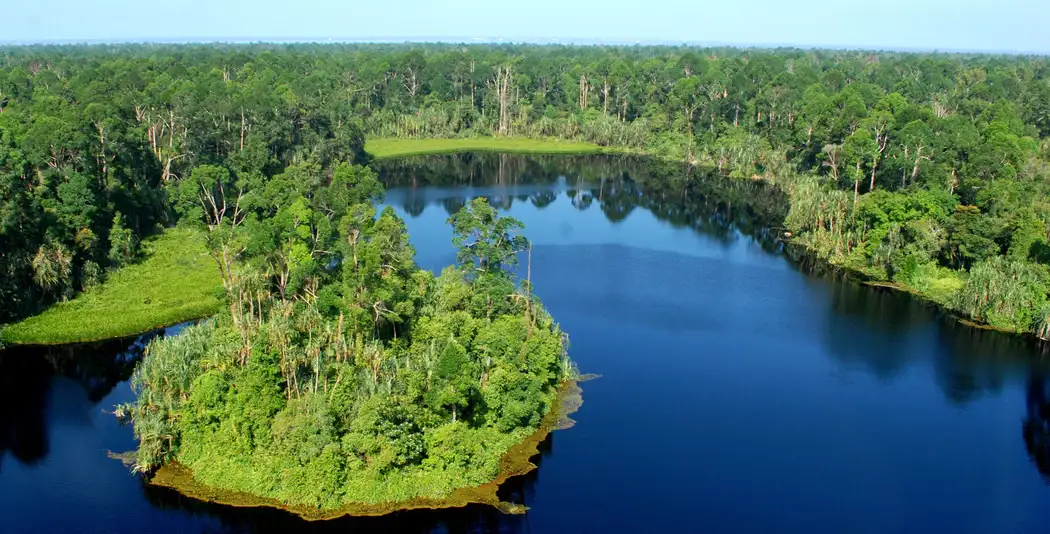
Cibinong - BRIN Public Relations. The National Research and Innovation Agency (BRIN), through the Research Center for Ecology and Ethnobiology (PREE), has established a strategic collaboration with the Serindit Philosophy Centre (SPC) in a research project titled “Research and Development of Sustainable Forest Resource Management on Small Islands in the Sundaland Biodiversity Hotspot.” This collaboration officially began on October 13, 2025, and will continue until 2028.
Henti Hendalastuti Rachmat, Principal Expert Researcher at BRIN’s Research Center for
Ecology and Ethnobiology and the person responsible for the collaboration, explained that through this partnership, BRIN and SPC will develop a 2.5-hectare biodiversity restoration plot in Batam as a model for integrated small island ecosystem management. The field research will also include surveys of flora and fauna, biophysical analysis, as well as socio-ecological mapping to formulate practical conservation strategies.
Henti also explained the reasons for choosing Batam Island as one of the research loci. "Until now, Batam has been known as an industrial and trade area, but ecologically it is also a biodiversity hotspot that has not been extensively studied," she explained.
Henti elaborated that Batam's rapid growth since the 1960s has driven massive urbanization, directly impacting the decline of forest areas. "This condition makes Batam an ideal location to study ecological resilience amid development pressures," she added.
The Head of the BRIN Research Center for Ecology and Ethnobiology , Dr. Asep Hidayat, emphasized that this collaboration is a concrete step to strengthen applied ecological research that has a direct impact on environmental and community sustainability. “We want to ensure that the results of ecological research do not stop at the laboratory but truly contribute to the sustainable management of natural resources, especially in coastal areas and small islands that are the focus of our research,” said Asep.
This partnership aims to strengthen research on ecology and biodiversity conservation in island regions that are vulnerable to human activity pressures and climate change. The research focuses on efforts to restore fragmented forest landscapes, socio-ecological studies of local communities, and the development of ecosystem-based management models in the Riau Archipelago Province, particularly Batam Island.
He explained that the scope of the PREE research not only covers terrestrial ecosystems but also aquatic areas as well as the boundary zones between the two. This cross-ecosystem approach is necessary to understand the dynamics of biodiversity in the Sundaland region, an important biogeographical area that includes Sumatra, Borneo, Java, and the Riau Islands.
This region is known for having the highest levels of endemism in the world, yet it also faces serious threats due to deforestation, land conversion, and rising sea levels. According to various studies (Fisher et al., 2011; Verma et al., 2020), more than 70 percent of the Sundaland region has undergone intensive modification by human activities. Therefore, research by BRIN and SPC is expected to address the urgent need for adaptive and evidence-based conservation strategies.
Nature Conservation with a Scientific Approach and Local Knowledge
The Chairman of the Serindit Philosophy Centre Foundation, Fauzan Alawy, explained that the institution he leads promotes the approach of salus naturae, salus populi — the welfare of nature as the foundation for human welfare. “We want to bridge modern science and local knowledge. Both are important for designing conservation that is not only scientific but also rooted in the values and wisdom of local communities,” he said.
Fauzan added that SPC will play an active role in involving local communities through participatory conservation training, field action research, and coastal community empowerment. All these activities are designed so that the community becomes the primary actor in protecting their own ecosystems.
“Almost all of our conservation activities involve the local community. We believe that true sustainability can only be achieved if the community also owns and protects its natural environment,” he added.
Within the research framework, SPC will also facilitate the documentation of research results through scientific publications, educational media, and collaborative environmental campaigns. These activities are expected to encourage the creation of science-based conservation networks at the regional level.