News Detail
Developing Countries Encouraged to have Green Energy Infrastructure by 2030
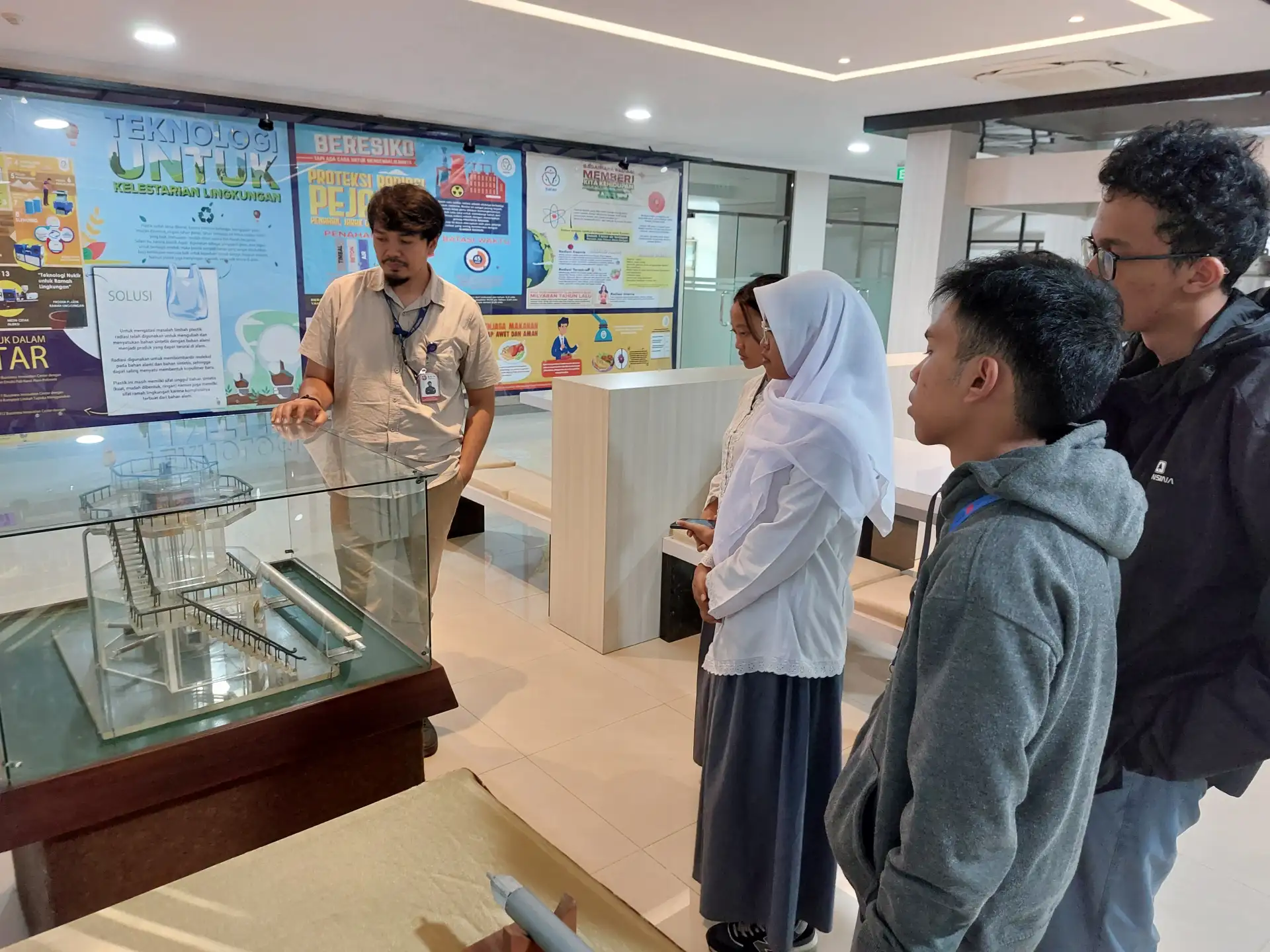
Bandung - BRIN Public Relations. Junior Expert Researcher at the Research Centre for Nuclear Reactor Technology (PRTRN) of the National Research and Innovation Agency (BRIN) Nanda Nagara said that Sustainable Development Goal (SDGs) number 7 adopted by the United Nations (UN) is clean and affordable energy. By 2030, developing countries are expected to have the infrastructure to provide environmentally friendly energy.
This addresses the increasing need for energy as population growth demands the utilisation of sustainable energy sources.
“The increasing population, the advancement of technology, the need for electricity is increasing. What should be done? When our energy resources are limited and only rely on energy resources from fossils or oil, natural gas, coal, which have a limited lifespan,” said Nanda in an education session for students of SMA Negeri 19 Bandung, in Bandung, Thursday (20/2).
Nanda explained that there are three focuses in SDGs number 7. First, ensuring access to affordable, reliable and modern energy for all. Second, increasing the share of renewable energy in the global energy mix. And third, doubling the rate of improvement in global energy efficiency.
Indonesia, he continued, has great potential in clean and affordable energy. Data from the Directorate General of New Renewable Energy and Energy Conservation (EBTKE) for 2023 shows that Indonesia has a huge potential for renewable energy of up to 417.8 GW. But only 2.5 per cent or around 10.4 GW has been utilised.
The potential for renewable energy in Indonesia includes ocean currents, wind, geothermal, hydro, bioenergy, and solar.
Government support includes research and development, technology development to be competitive, incentives to attract investors, and improved regulations. These things need to be supported by the government so that this huge potential can be optimised.
“One of BRIN's roles here is in terms of research and development,” said Nanda.
Nanda reminded that Indonesia's primary energy needs are met from fossil sources such as oil, coal, and natural gas. Mining these energy sources causes ecosystem changes and environmental damage. Mining activities increase carbon dioxide emissions, produce acid rain, deplete the ozone layer, and increase the greenhouse effect.
Energy consumption continues to increase with population growth and technological advances. The government needs to consider other energy sources to ensure energy security, protect the environment, and reduce negative impacts.
“What damage can arise? Environmental damage, one of which is from fossil energy mining, can damage ecosystems and increase carbon emissions. Fossil dependence, energy consumption continues to increase, while fossil energy reserves are depleting,” he said.
Alternative energy to fossil fuels is needed to ensure energy sustainability in the future. New and renewable energy has a low impact and ensures sustainability.