IDEN
News Detail
Realizing Future Energy, BRIN Prepares a Research and Innovation Ecosystem for Nuclear Energy
Published on December 6, 2024
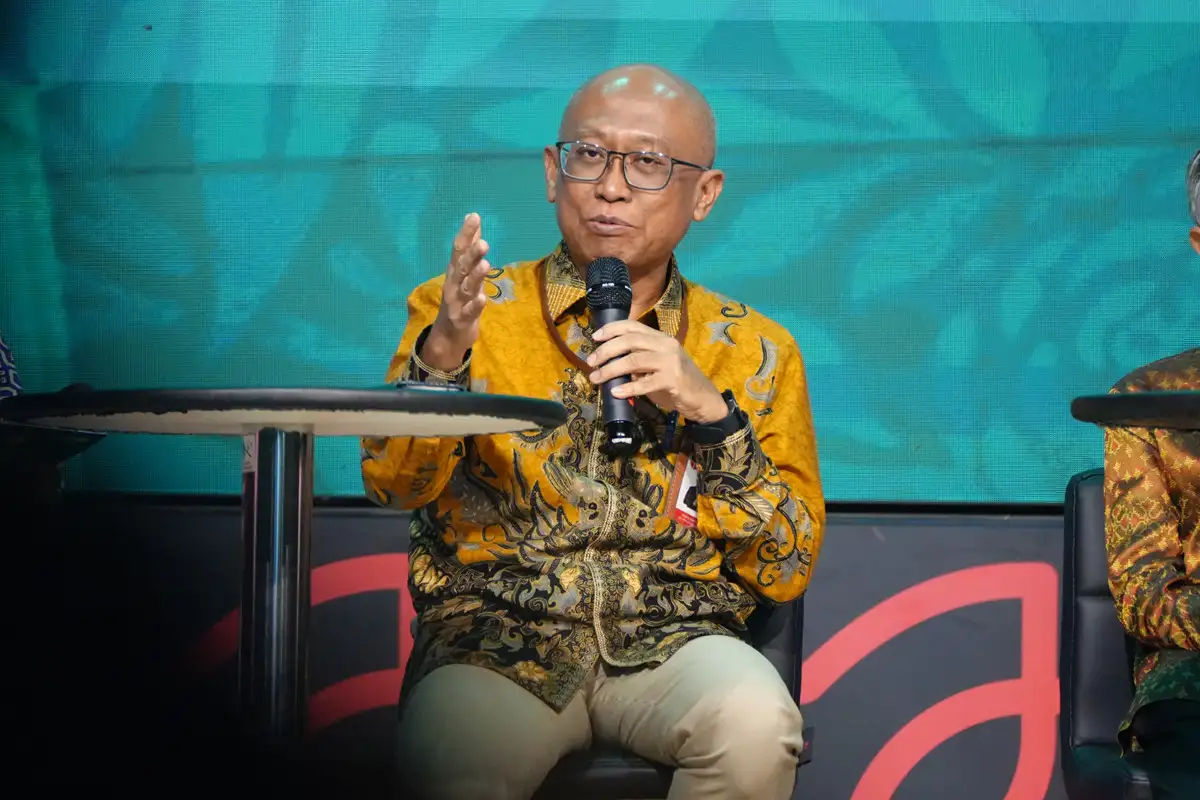
Jakarta-BRIN Public Relations. The Chairman of the Research Organization for Nuclear Energy (ORTN) of the National Research and Innovation Agency (BRIN), Syaeful Bakhri, conveyed a strategic vision regarding the role of nuclear research and innovation in national development. He expressed this during the National Nuclear Research and Innovation Ecosystem Discussion event, which is part of the Siwabessy Award and Memorial Lecture 2024 series, at the BJ Habibie Building, Jakarta, on Thursday (5/12).
In the event, Syaeful emphasized the importance of synergy among institutions, universities, and industries to bring Indonesia into a new era based on nuclear technology. According to Syaeful, BRIN has prepared programs and platforms for nuclear collaboration.
"Attention to nuclear technology is increasing, both nationally and internationally. The President of Indonesia, Prabowo Subianto, has made nuclear technology, particularly Nuclear Power Plants (NPP), a part of the development strategy," Syaeful stated.
This, as Syaeful continued, is evident from various diplomatic opportunities, such as meetings with leaders from Brazil, Russia, Canada, and China, as well as the Indonesian delegation at COP in Dubai, which emphasized the importance of nuclear power plants (NPP) in supporting the low-carbon energy transition. "The government has a grand vision of making nuclear technology a solution to the nation's challenges, including reducing greenhouse gas emissions, strengthening the economy, and achieving energy independence," Syaeful asserted.
According to Syaeful, BRIN, as the forefront of research and innovation, has a vision to strengthen a competitive and high-quality national research ecosystem. In the context of nuclear, he continued, there are at least three priorities that are the main focus. First, related to energy self-sufficiency. They have prepared a plan for the construction of a nuclear power plant to support the national energy needs. BRIN targets the operation of Indonesia's first nuclear power plant in 2032 with a capacity of 250-300 MW, using the latest generation small modular reactor (SMR) technology.
Second, the development of human resources in nuclear technology. They are also continuously striving to develop human resource (HR) competencies in the field of nuclear technology to support the national workforce needs, including the target of 4,900 nuclear experts for the operation of nuclear power plants by 2040.
Third, efforts to support downstream and industrialization. In this regard, Syaeful said, BRIN plays a role in enhancing the role of nuclear technology in supporting domestic industries, such as pharmaceuticals, food, and waste processing, through the application of accelerator and reactor-based technology.
Currently, Syaeful said, BRIN has developed three national collaboration platforms as part of the 2025-2029 nuclear research roadmap. First, the Nuclear Technology Platform for Detection and Therapy. He stated that nuclear technology offers high-precision methods for treatment, such as cancer therapy using radioisotopes. "BRIN has produced radiopharmaceutical products that support modern medicine with minimal risk to healthy tissue," he said.
Second, the Sustainable Low-Carbon Energy Platform. Syaeful explained that through the development of NPPs, BRIN plays the role of a technical support organization, ensuring the safe and efficient application of nuclear technology in Indonesia.
Third, Nuclear Applications for Industry and Daily Life. Syaeful explained that nuclear technology can be applied for food product sterilization, food preservation, and even genetic mutation in plants to enhance agricultural productivity.
Therefore, strengthening human resources and collaboration platforms is key to the successful implementation of nuclear technology. Universities and industries are invited to contribute to various programs, including education (from undergraduate to postdoctoral), joint research, and the MBKM program (Merdeka Belajar Kampus Merdeka). In addition, the revitalization of research facilities such as the GA Siwabessy Reactor, the Kartini Reactor, and other supporting facilities has become a top priority. "This collaboration is expected to give birth to nuclear technology independence and innovative products made by the Indonesian nation," as added by Syaeful.
With strong commitment from the government, BRIN, and various stakeholders, nuclear technology is expected not only to become a solution for future energy but also a major driver of innovation and the welfare of the Indonesian people.
On the other hand, Professor and Researcher from the Nuclear Science and Technology Center at the Bandung Institute of Technology (ITB), Abdul Waris, outlined the importance of research collaboration as a bridge between local innovation and international quality. Abdul presented a strategic perspective on how nuclear research can be a catalyst for Indonesia's transformation into an advanced technology era.
According to Abdul, the progress of a country does not only depend on the wealth of natural resources (SDA), but more on the management of human resources (SDM). "Many advanced countries do not have abundant SDA, but they have superior SDM." "They are able to innovate and utilize knowledge to turn limitations into advantages," he said.
Indonesia, with its great potential in the education and research sectors, must strengthen human resources to drive innovation through inter-institutional collaboration, both nationally and internationally. Abdul gave an example, although ITB has abundant student resources, the support for research tools and facilities is often more complete at research institutions like BRIN.
"Students are a great asset because they have more time to explore technology compared to lecturers. Collaboration with research institutions can be a solution to harness this potential," he added.
Therefore, Abdul stated that educational institutions like ITB excel in theory and simulation using software, while research institutions like BRIN excel in infrastructure. "We at ITB, for example, often use software for simulations, but validation still requires physical facilities such as nuclear reactors or particle accelerators that are available at research institutions," he explained.
Abdul also shared experiences from ITB's research collaboration with national research institutions in the early 2000s. At that time, the human resource development program was conducted through doctoral and master's scholarships involving various universities, such as ITB, UGM, and BP research institutions. "Programs like this produced many experts, one of whom is a prominent figure from UGM, who is now an inspiration in the national nuclear field," he recalled.
He added that cross-institutional collaboration can serve as a successful example in nurturing research talent for various strategic sectors, including nuclear energy, mobility technology, and medicine. As a concrete step, ITB has established the Nuclear Science and Technology Center, which aims to serve as a bridge between universities, industry, and research institutions. This center is focused on bridging research needs with industry and facilitating technological exploration beyond the traditional education sector. (jml/translator:akb)