News Detail
Facing Global Challenges, BRIN and MNR China Establish Marine Science and Technology Cooperation
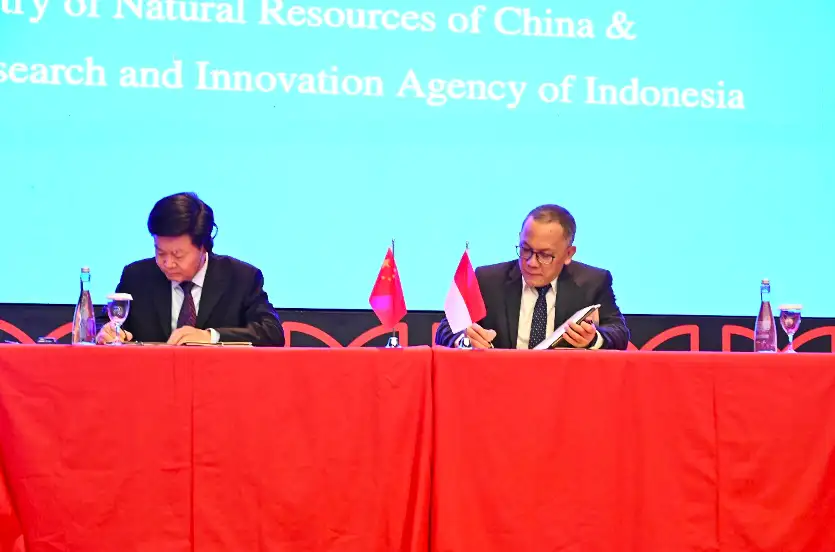
Jakarta-BRIN Public Relations. The National Research and Innovation Agency (BRIN) and China's Ministry of Natural Resources (MNR) signed a Memorandum of Understanding (MoU) on cooperation in the field of marine science and technology. This cooperation is an important milestone in strengthening Indonesia-China bilateral relations while supporting sustainable marine management through various scientific and technological initiatives.
“BRIN is China's main partner in this maritime cooperation. We not only act as a bilateral partner, but also as a hub for maritime cooperation between China and countries in Southeast Asia,” said BRIN Chairman Laksana Tri Handoko after opening the “China-Southeast Asian Countries Marine Cooperation Forum” at BRIN Building, Jakarta, Thursday (28/11).
Meanwhile, Fangli Qiao, Deputy Director General of the First Institute of Oceanography, China's Ministry of Natural Resources, revealed that the forum resulted in several important achievements, including the signing of a Memorandum of Understanding between China's Ministry of Natural Resources and Indonesia's National Research and Innovation Agency (BRIN). This step reinforces the commitment of both countries in strengthening marine scientific and technological cooperation.
Fangli highlighted three main focuses of cooperation discussed at the forum: marine disaster prevention and mitigation, enhancing marine-based economic capabilities, and marine conservation. Grand challenges such as marine pollution and climate change are top priorities in these joint efforts. He emphasised that technology and knowledge sharing between China and Southeast Asia is crucial to achieving effective solutions.
“Understanding between scientists is very important, but concrete action is the key to achieving sustainable development that involves the general public. Initiatives like OceanDust and the new cooperation centre provide great opportunities for China and Southeast Asian countries to face ocean challenges together,” Fangli said.
In other words, this cooperation aims to provide a framework based on the principle of equality and mutual benefit. The parties agreed to focus on various priority areas, including: (1) Marine ecological environment and marine biotechnology, (2) Ocean forecasting and marine disasters, (3) Climate change impacts on the oceans, (4) Satellite remote sensing technology, (5) Exploration of ocean and seabed resources, and (6) Cooperation within the framework of the UN Decade of Ocean Science for Sustainable Development (2021-2030).
In its implementation, this cooperation will be manifested in various forms, including joint research and studies, exchange of researchers, academics, and experts, operation of joint platforms such as the ‘Indonesia-China Ocean and Climate Centre,’ marine scientific surveys, exchange of data and information, conduct of seminars, symposiums, and exhibitions on marine technology, and capacity building programmes.
To ensure effective implementation, the cooperation stipulates the establishment of the Joint Committee on Marine Science and Technology Cooperation (JCMSTC). This committee is tasked with planning, directing and facilitating cooperation activities and evaluating their implementation. JCMSTC meetings will be held alternately in Indonesia and China, or through a virtual platform.
The agreement also emphasises that aspects of intellectual property rights, genetic resources, and traditional knowledge are regulated in accordance with applicable regulations in both countries, referring to previous agreements. Likewise, confidential documents, data, and information will be strictly maintained by both parties during and after the implementation of this cooperation. In addition, any personnel involved are required to comply with the laws and regulations of the host country.
Through this agreement, BRIN and MNR hope to create a strategic cooperation that has a positive impact on marine development and the strengthening of bilateral relations between Indonesia and China. This move reflects the two countries' commitment to collaborate in addressing global ocean challenges and utilising innovative technologies for the sustainability of marine ecosystems.
In addition, the launch of a new cooperation centre, the Indonesia-China Center for Ocean and Climate, was a highlight. The centre is expected to be a key platform for joint research, knowledge exchange and the development of technology-based solutions in the marine field. The forum also introduced an innovative system called OceanDust, an ocean-to-climate early warning system designed to enhance the region's ability to deal with the impacts of climate change.
Through this forum, China and Southeast Asian countries are expected to strengthen strategic collaboration to create innovative solutions to marine challenges. With initiatives such as OceanDust and new cooperation centres, a more sustainable future for the region is becoming increasingly apparent.